
Biphasic sleep means sleeping in two blocks per 24 hours as a substitute of 1. It is available in two kinds: a protracted evening’s sleep plus a daytime nap, or an evening cut up in two with an awake interval in between, referred to as segmented sleep. Historic data and one lab examine counsel individuals as soon as slept in two segments, however subject research of non-industrial teams disagree, so it’s not confirmed to be the one pure manner. Brief naps below about half-hour seem low danger, whereas lengthy routine naps are linked to worse well being in observational research. Both kind wants the identical whole sleep: seven or extra hours. Waking briefly at evening could be regular and isn’t all the time insomnia. That is instructional data, not medical recommendation.
From the follow
[RILEY: Add 2–3 sentences from your own client work. For example, what clients tell you when they wake in the night and worry that something is wrong, or how often a short nap helps or hurts their night sleep. Only include what you have actually observed. Delete this block if you’d rather not include it.]
What’s biphasic sleep?
Biphasic sleep means sleeping in two separate blocks throughout a 24-hour day as a substitute of 1. The phrase covers two fairly totally different patterns, and mixing them up causes plenty of confusion on-line.
- Monophasic sleep: one lengthy block, normally at evening. That is the fashionable default.
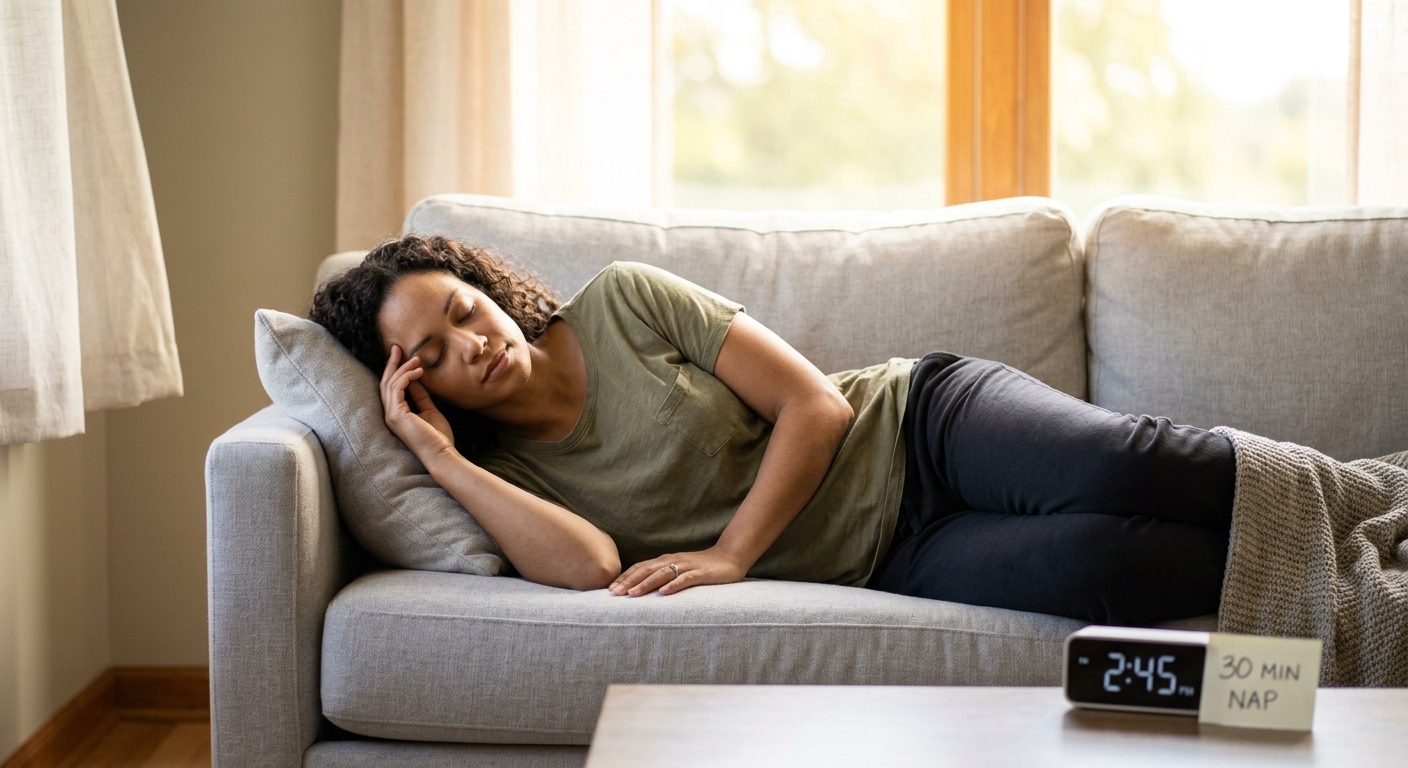
- Biphasic sleep with a nap: one foremost evening sleep plus a daytime nap, typically referred to as a siesta.
- Biphasic sleep, segmented: an evening cut up right into a “first sleep” and a “second sleep,” with about one to 3 hours awake in between.
- Polyphasic sleep: three or extra sleep blocks a day. A Nationwide Sleep Basis panel discovered no proof that it helps (see beneath).
The nap sort and the segmented sort have very totally different proof behind them, so this information treats them individually.
Did individuals actually sleep in two blocks earlier than electrical mild?

In some locations and instances, sure. However it’s not confirmed to be the only pure human sample.
Historian Roger Ekirch combed via paperwork spanning two thousand years. He discovered repeated references to a “first sleep” and a “second sleep” in English, Italian, French, and Latin, with each phases lasting about the identical time. Folks used the hole for prayer, chores, dialog, and extra. The references started fading within the late 1600s.
A lab examine agrees. Within the early Nineteen Nineties, psychiatrist Thomas Wehr saved volunteers in 14 midnights an evening for a month. After a couple of days of lengthy sleep to repay debt, they settled into about 4 hours of sleep, one to 3 hours awake, and about 4 extra hours of sleep. The second sleep was lighter, with extra REM and fewer deep sleep.
The sphere proof is cut up. A 2017 examine in a rural Madagascar village with out electrical energy discovered a peak in exercise after midnight on 49% of nights, in step with segmented sleep. However a 2015 examine of three foraging teams in Tanzania, Namibia, and Bolivia discovered one lengthy bout of sleep and no segmentation. A 2017 examine of the Hadza hunter-gatherers discovered quick, versatile sleep, about 6.25 hours, with an early-morning sleep interval and opportunistic daytime napping.
The truthful takeaway is that human sleep seems versatile. Two blocks could be pure below some circumstances, and one block below others.
Is biphasic sleep wholesome?
It will depend on which sort you imply, and on whether or not you continue to get sufficient whole sleep. The American Academy of Sleep Drugs and the Sleep Analysis Society say adults want seven or extra hours per 24 hours. Splitting your sleep doesn’t change that quantity.
Biphasic sleep with a nap
The proof is combined and principally observational. A 2007 Greek examine of greater than 23,000 adults discovered that individuals who napped often had about 37% decrease coronary mortality. However a 2024 evaluate of 44 cohort research, protecting about 1.86 million individuals, discovered that routine napping was linked to the next danger of loss of life, coronary heart illness, metabolic illness, and most cancers, and a decrease danger of cognitive impairment and sarcopenia. Naps of half-hour or longer carried greater dangers, whereas naps below half-hour confirmed no vital danger.
These research can’t show trigger and impact. Folks could nap extra due to poor evening sleep or an underlying sickness, so a nap generally is a marker moderately than the trigger. Our complete guide to napping covers nap with out wrecking your evening.
Segmented sleep (first sleep and second sleep)
There aren’t any good trials of intentionally splitting the evening in wholesome individuals. Historical past and Wehr’s examine counsel it may be pure when nights are very lengthy, however no person is aware of whether or not selecting it improves well being or efficiency. Some sleep consultants have famous that waking between two sleeps could also be regular moderately than a dysfunction, which may change how we take into consideration evening waking.
Do you wake at evening and may’t inform whether or not it’s regular or an issue? If it’s carrying you down, book a consultation and we’ll search for the basis trigger.
Is waking up in the midst of the evening regular?
Generally, sure. Temporary waking could be a part of regular sleep, and specialists have famous that waking between two sleeps could replicate an older pure sample. It turns into an issue when it’s frequent, distressing, or hurts your days.
Power insomnia dysfunction is identified when signs occur at the very least three nights every week for at the very least three months, trigger misery or impairment, and are usually not defined by one other situation.
In the event you wake and can’t return to sleep, preserve the lights low and keep away from checking your cellphone. In case you have been awake some time, stand up and do one thing calm till you are feeling sleepy. That’s stimulus management, a core CBT-I software. For extra ways, learn how to go back to sleep after waking at night. In the event you wake round 2 or 3 a.m., see why you wake up at 3 a.m.
Who would possibly attempt biphasic sleep, and who ought to skip it?
It might swimsuit you if you already really feel higher after a brief early-afternoon nap and nonetheless sleep nicely at evening, or your schedule permits a noon break. Brief naps below 60 minutes confirmed the most effective cognitive advantages in a latest umbrella evaluate.
Watch out or skip it if:
- You’ve gotten insomnia. Daytime naps could make evening sleep tougher for some individuals.
- You nap for an hour or extra most days. That sample was linked to a 30% greater danger of coronary coronary heart illness in an umbrella evaluate.
- You need to use a cut up schedule to get much less whole sleep. There isn’t any dependable proof {that a} biphasic schedule enables you to want much less. See natural short sleepers.
- You’re feeling very sleepy every single day regardless of seven to 9 hours in mattress. A sleep problem resembling sleep apnea could also be concerned.
How will you attempt biphasic sleep safely?
- Shield whole sleep. Purpose for seven or extra hours throughout 24 hours.
- Preserve naps quick and earlier within the afternoon. Thirty minutes or much less is the vary with no vital added danger in a single giant evaluate. Earlier naps are much less prone to eat into your evening sleep drive.
- In the event you wake at evening anyway, keep calm, preserve lights low, and keep away from work or screens. Choose some extent at which you’ll stand up if sleep doesn’t return.
- Monitor for 2 weeks. Be aware evening sleep, naps, daytime vitality, and temper.
- Cease and examine in if evening sleep will get worse or daytime sleepiness grows.
For a way sleep phases shift throughout the evening, see our information to sleep cycles and stages.
What the Analysis Reveals
Historic data present two sleeps. Ekirch’s archival work, protecting paperwork throughout about two thousand years, discovered references to a primary sleep and a second sleep in a number of European languages, with the 2 phases lasting about the identical time. Family accounts describe going to mattress a few hours after nightfall, waking a couple of hours later for one to 2 hours, then sleeping till daybreak. References light from the late seventeenth century.
A lab examine reproduced the sample. In Wehr’s 1992 experiment, volunteers lived in 14 midnights a day for a month. Their sleep grew to become biphasic, cut up into two bouts a number of hours lengthy with a one-to-three-hour waking interval between them. The second bout contained extra REM and fewer deep sleep. Brief-photoperiod laboratory circumstances are excessive, although, and this doesn’t present that everybody ought to cut up their evening.
Area research disagree. A 2017 examine in Madagascar reported segmented sleep, with an exercise peak after midnight on 49% of nights. A 2015 Present Biology examine of three foraging societies discovered one lengthy sleep bout and no proof of segmentation. A 2017 Hadza examine reported versatile sleep with a constant early-morning interval plus daytime napping, a median of 6.25 hours of sleep, and a sleep effectivity of 68.9%. The authors proposed that flexibility in sleep timing has itself been formed by evolution.
Nap analysis provides combined alerts. The 2007 Greek cohort of greater than 23,000 individuals linked common napping to decrease coronary mortality. A 2024 evaluate of 44 cohort research discovered greater dangers of loss of life, heart problems, and metabolic illness with routine napping, particularly for naps of half-hour or longer, however decrease dangers of cognitive impairment. A 2026 umbrella evaluate of 16 meta-analyses discovered that naps below 60 minutes maximized cognitive advantages, whereas naps over 60 minutes had been linked to a 30% greater danger of coronary coronary heart illness. All of that is observational.
This text is for training solely and isn’t medical recommendation. Discuss with a certified clinician about your personal sleep, well being circumstances, and medicines.
If you want to see how we would have the ability that will help you with this deeper, schedule a free consult here.
Need a hand along with your sleep schedule?
Be part of The Sleep Nirvana Membership, our free sleep course and group: Join the free sleep course and community.
When to Search Skilled Assist
- You wake within the evening typically, really feel distressed about it, or your days undergo. If it occurs at the very least three nights every week for a number of months, ask about insomnia therapy resembling CBT-I.
- You want lengthy naps most days, otherwise you really feel very sleepy regardless of seven to 9 hours in mattress. A sleep problem could also be concerned.
- You snore loudly, gasp or choke at evening, or wake with complications. These can sign sleep apnea.
- You might be averaging below seven hours whole and utilizing a cut up schedule to manage.
- You’re feeling persistently unhappy or hopeless, or have ideas of self-harm. Contact a clinician straight away, and within the US you’ll be able to name or textual content 988 at any time.
Steadily Requested Questions
What’s biphasic sleep?
Biphasic sleep means sleeping in two separate blocks throughout 24 hours as a substitute of 1. It takes two kinds. One is a protracted evening’s sleep plus a daytime nap, typically referred to as a siesta. The opposite is segmented sleep, wherein the evening is cut up into a primary sleep and a second sleep with a waking interval of about one to 3 hours in between. Each kinds nonetheless want roughly seven or extra hours of whole sleep for many adults.
Is biphasic sleep wholesome?
It will depend on the shape and on whole sleep. Brief naps below about half-hour confirmed no vital danger in a single giant evaluate of cohort research, whereas routine naps of half-hour or longer had been linked to greater dangers of loss of life and coronary heart and metabolic illness. These research are observational, so they can not show trigger. For segmented sleep, there aren’t any good trials of intentionally splitting the evening, so its well being results are unknown. Adults nonetheless want seven or extra hours whole.
What’s the distinction between biphasic and polyphasic sleep?
Biphasic sleep makes use of two sleep blocks a day, whereas polyphasic sleep makes use of three or extra, typically with very quick sleeps. A 2021 Nationwide Sleep Basis panel discovered no proof of advantages from polyphasic schedules and linked them, and the sleep loss they trigger, to worse bodily well being, psychological well being, and efficiency. Biphasic patterns that also present sufficient whole sleep are far much less excessive, however they don’t seem to be confirmed to be higher than one block.
Is it regular to get up in the midst of the evening?
Waking briefly throughout the evening could be regular, and it’s not all the time insomnia. Some sleep consultants word that waking between two sleep intervals could replicate an older pure sample. It turns into an issue when it causes misery or daytime bother. Power insomnia dysfunction is identified when signs occur at the very least three nights every week for at the very least three months. In the event you wake typically and really feel unrested, observe your nights and ask a clinician about causes like sleep apnea or stress.
Did people actually sleep in two shifts?
In all probability in some locations, however not in all places. Historian Roger Ekirch discovered references to first sleep and second sleep in diaries, court docket data, and literature throughout about two thousand years of European historical past. A lab examine with 14-hour nights produced two sleep blocks, and a Madagascar village confirmed segmented sleep on about half of nights. But a examine of three foraging teams in Tanzania, Namibia, and Bolivia discovered one lengthy sleep bout, so the query continues to be open.
When to Work With a Sleep Guide
In the event you wake at evening, nap to manage, or have tried totally different sleep schedules with out lasting outcomes, a deeper trigger could also be concerned: your circadian rhythm, nervous system, hormones, intestine, or nutrient standing. The Sleep Guide appears to be like for these root causes as a substitute of handing you generic sleep-hygiene suggestions.
Schedule a free sleep assessment.
Trending Merchandise

COONP King Mattress Topper, Extra T...

CoolShields Waterproof Bed Pads Inc...

Nordic Elk Mattress Bags for Moving...

Waterproof Mattress Protector Twin ...

Utopia Bedding Waterproof Mattress ...

BEDLORE Waterproof Mattress Protect...

Queen Mattress Protector Waterproof...
